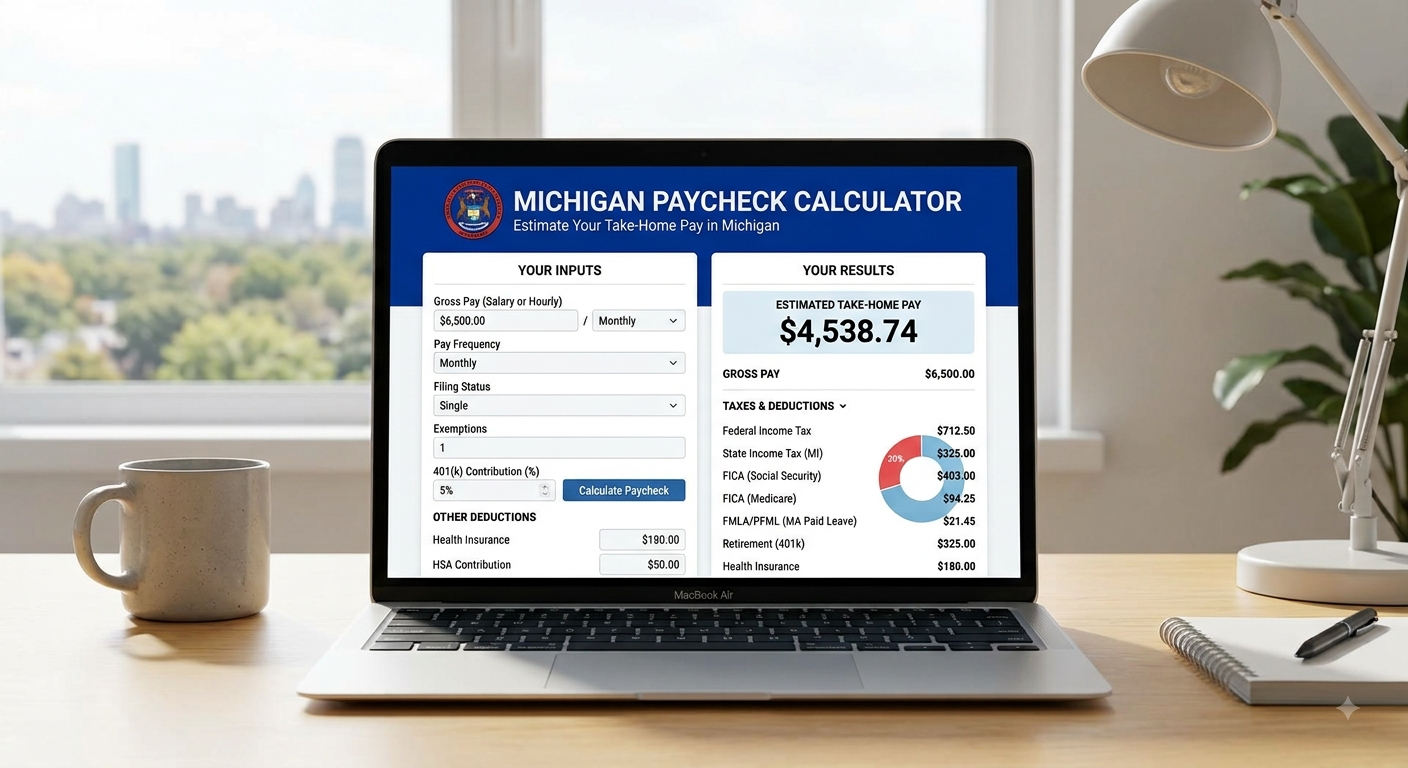
Michigan Paycheck Calculator
Estimate your Michigan take-home pay after federal income tax, Michigan income tax, Social Security, Medicare and other paycheck deductions.
Personal exemption: $5,900
Michigan Paycheck Calculator 2026
The Michigan Paycheck Calculator helps employees estimate their take-home pay after federal income tax, Michigan income tax, Social Security, Medicare and other paycheck deductions.
Michigan uses a flat individual income tax rate rather than a progressive state income-tax bracket system for ordinary individual income. For tax year 2026, the Michigan individual income tax rate remains 4.25%.
The Michigan Department of Treasury also lists a $5,900 personal exemption amount for 2026.
Michigan Income Tax Rate for 2026
The Michigan individual income tax rate for tax year 2026 is 4.25%. The Michigan Department of Treasury confirmed that the rate remains at 4.25% for 2026.
Unlike states with several state income-tax brackets, Michigan generally applies its 4.25% rate to Michigan taxable income.
Michigan Personal Exemption for 2026
The Michigan 2026 withholding guide lists a personal exemption amount of $5,900.
The number of exemptions you can claim can affect your Michigan taxable income and withholding. Your actual eligibility depends on Michigan tax rules and your individual circumstances.
Does Michigan Have Local Income Tax?
Michigan has a state income tax and some Michigan cities also impose local income taxes. Detroit is one important example.
Because local tax rules can depend on where you live and where you work, this calculator allows you to enter an annual local income-tax amount instead of assuming that every Michigan employee pays a local tax.
Federal Taxes on a Michigan Paycheck
Michigan employees are also subject to federal payroll and income taxes. Federal income-tax withholding depends on factors such as filing status, Form W-4 information, dependents, deductions and additional withholding.
Social Security Tax
Social Security is a federal payroll tax rather than a Michigan state tax. Covered employees generally pay the employee portion of Social Security tax on wages up to the annual Social Security wage base.
Medicare Tax
Medicare is another federal payroll tax generally withheld from employee wages. Higher-income employees can also be subject to the Additional Medicare Tax under federal law.
Michigan Paycheck Examples
Estimate take-home pay for a Michigan employee earning $40,000 per year.
Estimate federal, Michigan and payroll taxes on a $60,000 annual salary.
See how federal and Michigan taxes affect a $100,000 salary.
Weekly vs. Biweekly Michigan Paychecks
Employees paid weekly generally receive 52 paychecks per year. Biweekly employees generally receive 26 paychecks. Semi-monthly employees receive 24 paychecks and monthly employees receive 12.
The pay frequency changes the amount of each paycheck, but it does not change the employee’s annual salary.
Hourly Pay and Overtime
Michigan hourly workers can enter their hourly wage, regular weekly hours and overtime hours to estimate annual gross income.
Actual overtime eligibility and overtime compensation depend on federal and Michigan employment rules and whether the employee is exempt or nonexempt.
Why Your Actual Michigan Paycheck May Be Different
An online paycheck calculator provides an estimate. Your actual employer paycheck may differ because of your withholding forms, benefits, deductions, tax credits and local taxes.
- Federal Form W-4
- Michigan Form MI-W4
- Filing status
- Michigan personal exemptions
- Federal deductions and credits
- Retirement contributions
- Health insurance deductions
- Other pre-tax benefits
- Post-tax deductions
- Local city income tax
- Additional withholding
- Employer payroll practices
Michigan Paycheck Calculator FAQ
The Michigan Department of Treasury’s 2026 Income Tax Withholding Guide lists a 4.25% withholding rate and a $5,900 personal exemption amount.
Michigan’s Department of Treasury also confirmed that the individual income tax rate for tax year 2026 remains 4.25%.